
The Elevate Journal
- Leadership
- Nonprofit Support
- Accessibility
- Community Engagement
- Equity
- Values
- Data Collection
- Research
- Learning
- Internal Culture
- Program Design
- Collective Impact
- Storytelling
- Compassion
- Operations
- Project Spotlight
- Systems Change
- Facilitation
- Impact
- Evaluation
- YPAR
- Fundraising
- Focus Groups
- Data
- Reflection
- Reporting
- Surveys
- Services
- Evalaution
- Collaboration
- Strategy
- Resources
- Stakeholders

Strategy for Systems Change: How to Build Strategy for Collaboratives and Coalitions
This is the third post in our series on strategy for programs, organizations, and communities. If you've been following along, you’ve probably noticed a theme: designing a strong strategy looks pretty similar regardless of the size or complexity of the effort. Whether you're working on a single program or leading a cross-sector coalition, it comes down to the same core elements—gathering good information, setting clear goals and actions, and making space to learn and adapt as you go.

Strategy for Organizations: Relevant, Actionable, and Flexible Planning
This post is the second in our series on strategy for programs, organizations, and communities. In our first post, we explored what it looks like to apply strategic thinking at the program level—clarifying goals, aligning activities, and measuring what matters. Now, we’re zooming out to the organizational level: What is strategy, really? And how do you build a plan that helps your whole organization stay focused, aligned, and adaptive?

Strategy for Programs
At Elevate, we know that strong strategies drive meaningful results. But strategy isn’t one-size-fits-all—it looks different depending on whether you’re shaping a program, guiding an entire organization, or driving impact across a collaborative or community.
In this first installment, we’re focusing on program-level strategy—how to design services and interventions that are responsive, effective, and built to create lasting change.
8 Learnings for 8 Years
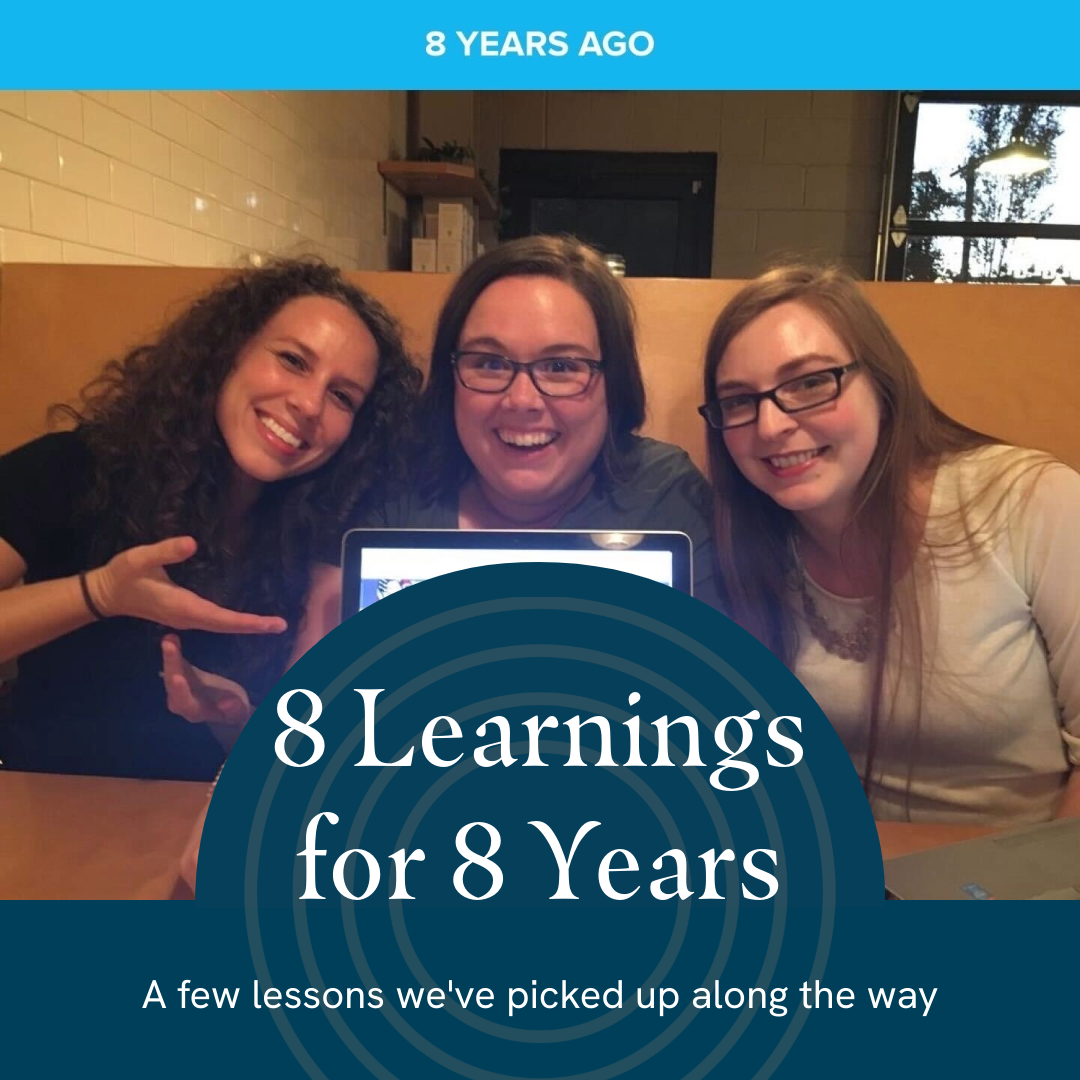
This month marks eight years since we started Elevate. We were three young professionals with a shared vision who saw a need in the sector, so we jumped in—armed with ambition and plenty of coffee. Over the years, we’ve poured long hours into this work, celebrating wins, tackling tough challenges, and staying true to our core value: learning. In that spirit, we took some time to reflect on what’s brought us here. Here are a few lessons we’ve picked up along the way.
Does collaboration work?
Somebody asked me the other day if I really believed in collaboration. We were kvetching about the challenges of doing Collective Impact work, and at the time, I sort of laughed it off and made light of it. But it made me think…do I really think collaboration - amongst organizations within a social service landscape, to solve a specific social challenge or improve outcomes for a certain population - works? And if so, what makes it successful?
What is Organizational Learning?
For nonprofit organizations, we want to be good stewards of the resources provided to us, therefore pilots and accepted failure may be scary concepts to try. However, breaking through an organizational learning disability and creating learning networks can start small, on the individual level, and embody the best stewardship of all: adapting from what you're learning.
We Just Learned a Lesson – How Do We Not Forget?
While most of the thought around learning begins and ends in school, our ability and necessity to learn carries us through the rest of our lives. Because we are taught at such a young age to retain so much information, it can get tricky understanding what to keep and what to forget (I know I don’t remember a lot of the things I learned in school). As we grow and change, the necessity for a mental rolodex of dates, relationships, professional development information, songs, books, etc. increases while the proverbial room in our minds stays the same. How do we keep this information safe and readily accessible? How do we know what information is not necessary to keep on standby?
Reflective Practice at Elevate
At Elevate, we have a core value around learning. This often shows up in our external work with clients where we collaboratively learn with partners and actively look for ways to augment learning through the work we do and the deliverables we produce. Learning also plays a central role in the internal work we do as an Elevate team, and reflective practice is one tool we use to learn and grow together.
Meeting the World with Compassion
Even at a time when the company is growing and we all feel connected to our work, we also each struggle with some version of malaise, some days more than others. At Elevate we typically view the world through the lens of systems, and this is a story about how our internal system is impacted by and can impact the external systems that we inhabit.
Evaluation is Not Neutral
Over the past few weeks, we have been turning our methods inward to critically examine how we do our work, as well as listening to each other and investigating our experiences, assumptions, and approaches related to equity and oppression. Together we are rebuilding “the Elevate way” based on clearer articulations of why and how our work advances equity.
Listening, Learning, and Planning for Action
We unequivocally believe that Black lives matter, and we recognize the power that data and narrative have in the fight for justice. We recognize that as a team of mostly White women, we are privileged in that, most days, we are able to compartmentalize these conversations. We know we don’t have the answers, and we know we will not get it right, but we are committing to making space to reflect, learn, unlearn, and grow.
Evaluative Thinking in Times of Crisis
Last week, while listening to one of my favorite podcasts, Pantsuit Politics, something that one of the cohosts really stood out to me. She said, “What a ‘pandemic world’ does is accelerate change and clarify problems.”