
The Elevate Journal
- Leadership
- Nonprofit Support
- Accessibility
- Community Engagement
- Equity
- Values
- Data Collection
- Research
- Learning
- Internal Culture
- Program Design
- Collective Impact
- Storytelling
- Compassion
- Operations
- Project Spotlight
- Systems Change
- Facilitation
- Impact
- Evaluation
- YPAR
- Fundraising
- Focus Groups
- Data
- Reflection
- Reporting
- Surveys
- Services
- Evalaution
- Collaboration
- Strategy
- Resources
- Stakeholders

Why Building a Collaborative Culture Within Your Organization Matters
Collaboration is hard. It's time-consuming. Some days it would genuinely be easier to just make the call on your own and move on. But the organizations that have figured out how to build real collaborative cultures from the inside out — the ones where people trust each other, know each other's strengths, and feel safe enough to contribute fully — those are the organizations that can take on the hard stuff. And in this work, there's no shortage of hard stuff.

Strategy for Programs
At Elevate, we know that strong strategies drive meaningful results. But strategy isn’t one-size-fits-all—it looks different depending on whether you’re shaping a program, guiding an entire organization, or driving impact across a collaborative or community.
In this first installment, we’re focusing on program-level strategy—how to design services and interventions that are responsive, effective, and built to create lasting change.

Navigating the Long Game of Changing Systems Part 3: Embedding and Sustaining Change: Middle-Late Years
Collaborating across organizations to address root causes and change conditions at the system level is a messy, long experience. There are so many different approaches - Collective Impact, Systemness, grassroots organizing, and so on - each with their own principles, frameworks, tools, and ways of doing the work “correctly.”

Navigating the Long Game of Changing Systems Part 2: Testing, Learning, and Refining: Early-Middle Years
Collaborating across organizations to address root causes and change conditions at the system level is a messy, long experience. There are so many different approaches - Collective Impact, Systemness, grassroots organizing, and so on - each with their own principles, frameworks, tools, and ways of doing the work “correctly.”

Navigating the Long Game of Changing Systems Part I: The Early Years
Collaborating across organizations to address root causes and change conditions at the system level is a messy, long experience. Over the next few months, I’m going to be exploring the life cycles of collaborative efforts and breaking them down into their essential elements, based on my own research, professional experience, and Elevate’s work in this space with partners working to improve systems across a range of issues.
Does collaboration work?
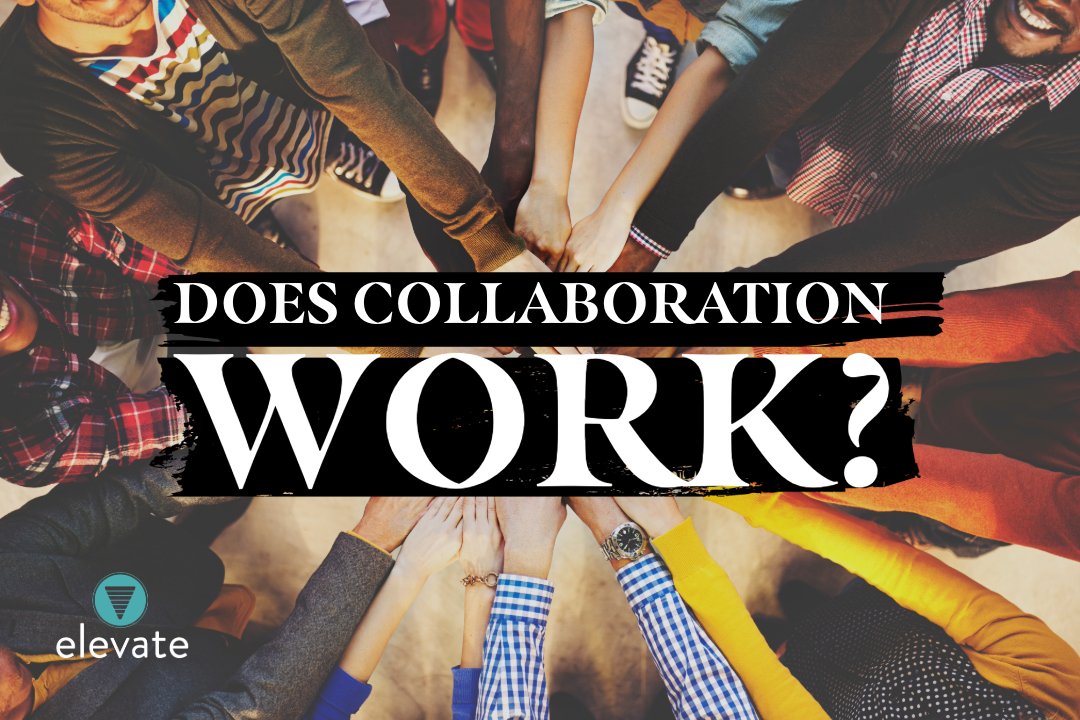
Somebody asked me the other day if I really believed in collaboration. We were kvetching about the challenges of doing Collective Impact work, and at the time, I sort of laughed it off and made light of it. But it made me think…do I really think collaboration - amongst organizations within a social service landscape, to solve a specific social challenge or improve outcomes for a certain population - works? And if so, what makes it successful?